

Many women think menopause only becomes relevant in their 50s. But hormonal changes can begin years before menopause itself.
When Does Perimenopause Start?
Menopause is confirmed after 12 months without a menstrual period. It most commonly occurs between ages 45 and 55, while the transition leading up to it can last several years.
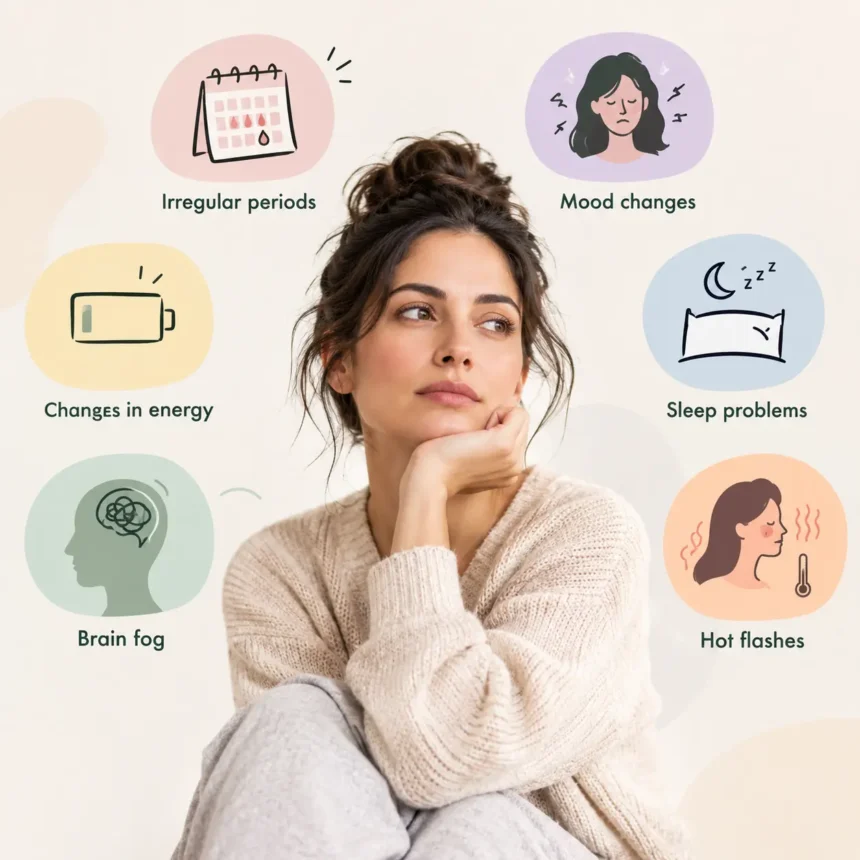
During perimenopause, you may notice:
- Irregular periods
- Mood changes
- Sleep problems
- Hot flashes
- Brain fog
- Changes in energy
If these symptoms appear earlier than expected, it is worth speaking with a healthcare professional rather than assuming they are caused by perimenopause.
Don’t Ignore the Signs
If you are in your 30s or 40s and experiencing changes in your periods, sleep, mood, or other symptoms, talk to your doctor.
You also do not necessarily have to wait until your periods stop completely to discuss treatment options. Hormone therapy and other treatments may be appropriate for some women, depending on their symptoms, age, medical history, and individual risks.
Your Symptoms Deserve Attention
You know your body best. If something feels different, ask questions and make sure your concerns are heard.
Getting the right information can help you make better decisions about your health.
Medical Disclaimer
This article is for general health information only and does not replace professional medical advice, diagnosis, or treatment. Menopause and perimenopause can affect women differently. If you are experiencing symptoms or have concerns about hormone therapy, speak with a qualified healthcare professional.
Sources
- National Institute on Aging (NIA) — What Is Menopause?
- National Institute on Aging (NIA) — Research Explores the Impact of Menopause on Women’s Health and Aging
- National Institute on Aging (NIA) — Sleep Problems and Menopause

Nancy Christine is a menopause and midlife content creator who shares relatable, practical insights about the changes women experience during perimenopause and menopause. Through her content, she talks openly about the physical and emotional changes that can come with shifting hormones, helping women feel less alone and more understood during this stage of life.