

Medically reviewed by Dr. Kim Einhorn
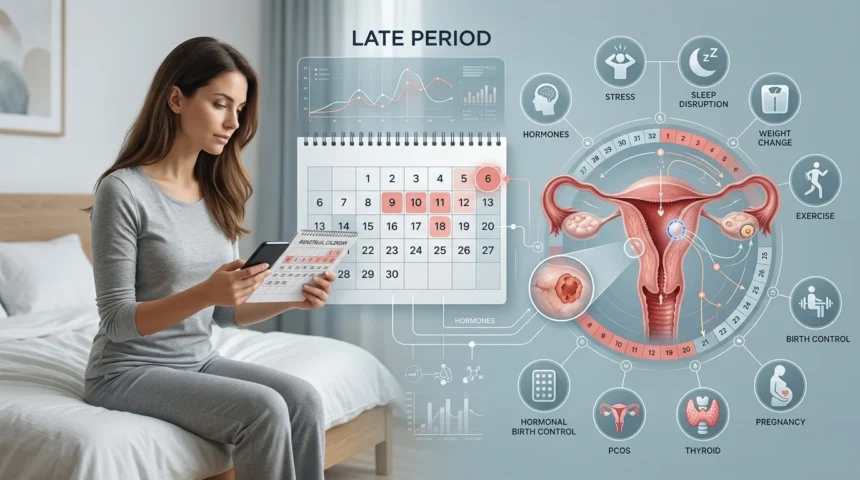
A late period can make you wonder what’s going on — especially if pregnancy is a possibility. But pregnancy isn’t the only reason your period may arrive later than expected. Stress, weight changes, exercise, sleep, hormones, medications and birth control can all shift your cycle.
So, why is my period late? The answer usually depends on your normal cycle length, anything that’s changed recently, and whether pregnancy is possible.
What Counts as a Late Period?
Cycles aren’t identical for everyone, and timing can shift from month to month even if you’re usually regular. A period is generally considered late once it hasn’t started around your expected date — commonly once you’re several days past a 21–35 day cycle. Being a couple of days late on its own usually isn’t a red flag.
Is a Period 2 Days Late a Reason to Worry?
Not usually. Cycles naturally vary, and stress, travel, poor sleep or illness can shift ovulation timing enough to push your period back a day or two. If pregnancy is possible, a test can help clarify things sooner rather than later.
Why Is My Period Late Not Pregnant?
If you’ve ruled out pregnancy, several other factors can delay your cycle:
1. Stress — Stress affects the hormones that trigger ovulation. Later ovulation means a later period. Work pressure, big life changes, and poor sleep are common triggers.
2. Changes in weight — Significant weight loss or gain affects reproductive hormones and can make periods irregular or absent.
3. Intense exercise — Heavy training combined with low calorie intake can suppress ovulation.
4. Disrupted sleep or routine — Travel, shift work, and major schedule changes can throw off your cycle.
5. Hormonal birth control — Some methods cause lighter, irregular, or absent bleeding by design. (Note: pregnancy is still possible if a method is missed or used incorrectly — see below.)
6. PCOS — Polycystic ovary syndrome often causes irregular or infrequent periods, sometimes alongside acne, excess hair growth, or ovulation problems. If your period is late every month, this is worth raising with a doctor rather than assuming it’s just “how your body is.”
7. Thyroid problems — Both an underactive and overactive thyroid can disrupt cycle timing.
8. Perimenopause — As menopause approaches, cycles often become less predictable — longer, shorter, heavier, or lighter.
9. Certain medications — Some drugs affect menstrual timing. Don’t stop a prescribed medication on your own; ask your doctor or pharmacist if you notice a change.
10. Illness or recent health changes — Being sick, especially if it affects appetite, sleep or stress levels, can temporarily delay your period.
Why Is My Period Late But Pregnancy Test Negative?
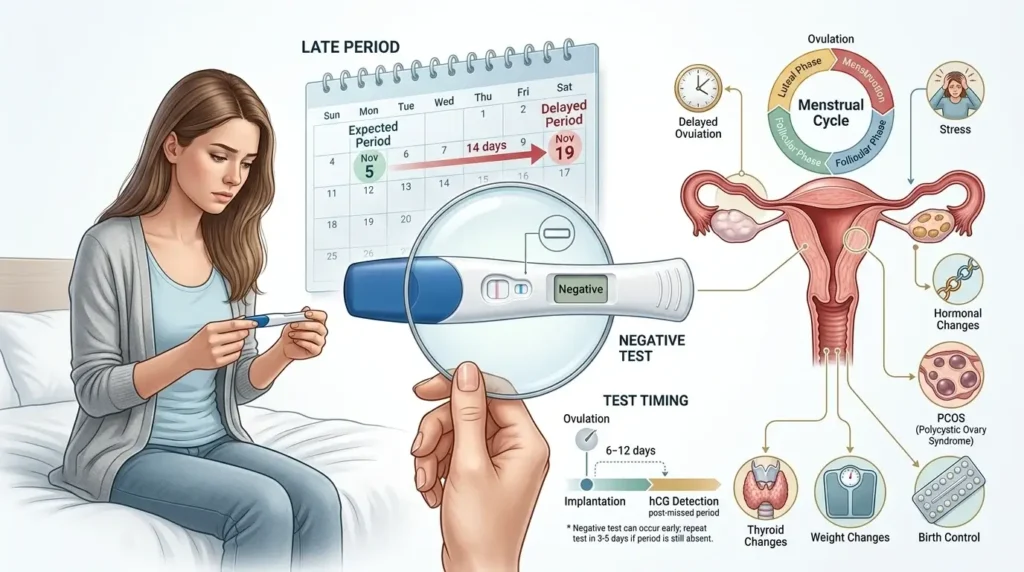
Timing matters here. Home tests detect hCG, a hormone that rises during pregnancy — testing very early can give a negative result even if you are pregnant. If your period still hasn’t arrived, repeat the test a few days later following the package instructions.
A negative test with a still-missing period can mean:
- You’re not pregnant and your cycle is simply delayed
- You tested too early
- Ovulation happened later than usual this cycle
- Stress or a lifestyle factor delayed things
- An underlying hormonal or health condition is involved
Why Is My Period Late But I Have Cramps?
This is a common and confusing combination. Possible explanations include:
- Your period may just be on its way — premenstrual hormonal shifts can cause cramping before bleeding starts
- Pregnancy can also cause cramping, which is another reason to test if pregnancy is possible
- Other causes of pelvic or abdominal pain exist too, so don’t assume cramping is always period-related — severe or unusual pain deserves its own evaluation
Why Is My Period Late Every Month?
An occasional late period is different from a consistently irregular pattern. If this keeps happening, track your cycles for a few months and look for a pattern. Recurring causes include PCOS, thyroid issues, hormonal changes, significant weight shifts, heavy exercise, certain medications, and perimenopause. Regularly late or unpredictable cycles are worth discussing with a healthcare professional.
Why Is My Period Late On Birth Control?
Hormonal birth control can intentionally cause lighter periods, irregular spotting, or no bleeding at all, depending on the method. That said, no method is 100% effective — if a pill was missed, taken late, or another method was used incorrectly, pregnancy is still possible and worth ruling out with a test.
Can Stress Really Make Your Period Late?
Yes. Stress affects the hormonal signals that trigger ovulation, so a delayed ovulation means a delayed period. This is one reason a normally regular cycle can suddenly run several days late during a stressful stretch. That said, don’t automatically chalk up a repeatedly late period to stress — persistent changes deserve attention.
When Should You Take a Pregnancy Test?
If you’ve had sex that could result in pregnancy and your period is late, a home test is a reasonable first step — follow the instructions carefully on timing. If it’s negative but your period still doesn’t show up, repeat the test in a few days or speak with a healthcare professional, who may recommend a blood test for a more sensitive result.
When Should You See a Doctor About a Late Period?
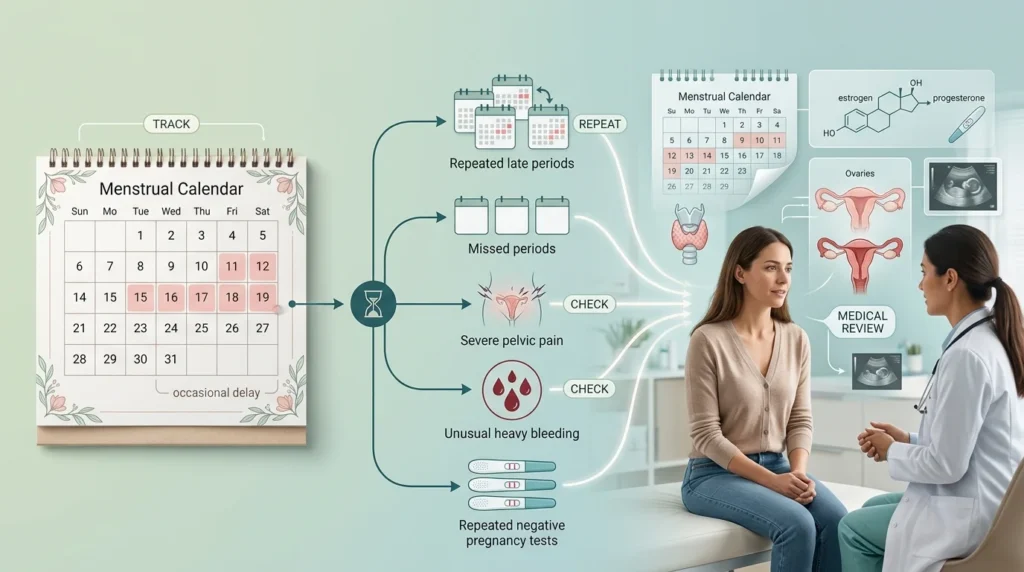
A single late period usually isn’t an emergency, but check in with a healthcare professional if:
- Your periods are repeatedly late or irregular
- You frequently miss periods, or one has stopped unexpectedly
- You notice a significant change in your usual pattern
- You have unusually heavy bleeding or persistent pelvic pain
- You keep getting negative pregnancy tests but your period still doesn’t return
Seek urgent care if pregnancy is possible and you develop severe abdominal or pelvic pain, fainting, dizziness, shoulder-tip pain, or heavy vaginal bleeding — these can signal a serious pregnancy-related complication.
What Can You Do If Your Period Is Late?
- Track your cycle — note start and end dates over a few months
- Test if pregnancy is possible — following the instructions on timing
- Consider recent changes — stress, sleep, diet, weight, illness, new medications
- Avoid extreme dieting or over-exercising
- See a professional if it keeps happening — repeated delays deserve a proper look
Frequently Asked Questions
Why is my period late?
Many factors can delay a period, including pregnancy, stress, hormonal shifts, weight changes, intense exercise, illness, medications, PCOS, thyroid issues, and perimenopause.
Why is my period late but not pregnant?
Once pregnancy is ruled out, look at stress, delayed ovulation, weight changes, exercise load, medications, and underlying conditions like PCOS or thyroid disorders.
If I’m not pregnant, why is my period late?
The most common non-pregnancy causes are stress, hormonal changes, PCOS, thyroid dysfunction, significant weight shifts, and intense exercise.
Why is my period late but pregnancy test negative?
Testing too early is the most common reason. hCG needs time to rise, so a repeat test in a few days is often more reliable than the first one.
Why is my period late and pregnancy test negative?
A negative test rules out pregnancy as the likely cause but doesn’t identify the actual cause — your cycle history and any other symptoms matter here.
Why is my period late for 2 days?
This is usually normal cycle variation, not a cause for concern on its own. Test if pregnancy is possible.
Why is my period late every month?
Recurring lateness is worth tracking and discussing with a doctor, since it’s more likely to point to PCOS, thyroid issues, or another ongoing factor than a one-off delay.
Why is my period late but I have cramps?
Cramps often precede a period, but they can also occur with pregnancy or unrelated pelvic issues — severe or unusual pain should be checked out.
Why is my period late on birth control?
Many hormonal methods intentionally cause lighter or absent bleeding. If the method was used incorrectly or a dose was missed, testing for pregnancy is still worthwhile.
Why is my period late this month?
A one-off late period is often explained by recent stress, sleep changes, illness, travel, or a shift in exercise or diet — not necessarily a health problem.
I’m not pregnant — why is my period late?
Beyond pregnancy, the usual suspects are stress, hormonal imbalance, PCOS, thyroid conditions, and significant lifestyle changes.
Conclusion
Pregnancy is only one possible reason your period is running late. Stress, lifestyle changes, hormonal birth control, PCOS, thyroid problems, weight changes and intense exercise can all delay a period, and being a few days late usually isn’t a sign that something’s wrong.
But if your periods are repeatedly late, you’ve missed several in a row, or you’re dealing with significant pain or other symptoms that concern you, it’s worth talking to a healthcare professional. Your cycle is useful health information — tracking it over time makes it much easier to notice when something’s actually changed.
References
- NHS — Missed or late periods — common causes and when to see a GP
- Cleveland Clinic — Irregular Periods (Abnormal Menstruation) — definitions, causes, and medical conditions linked to cycle changes
- NICHD (National Institutes of Health) — Amenorrhea — primary vs. secondary amenorrhea and underlying causes like PCOS
This article is for general information and isn’t a substitute for personal medical advice. If you have concerns about your menstrual cycle, talk to a doctor or gynecologist.

Nancy Christine is a menopause and midlife content creator who shares relatable, practical insights about the changes women experience during perimenopause and menopause. Through her content, she talks openly about the physical and emotional changes that can come with shifting hormones, helping women feel less alone and more understood during this stage of life.