


Medically reviewed by Dr. Hayama Brill
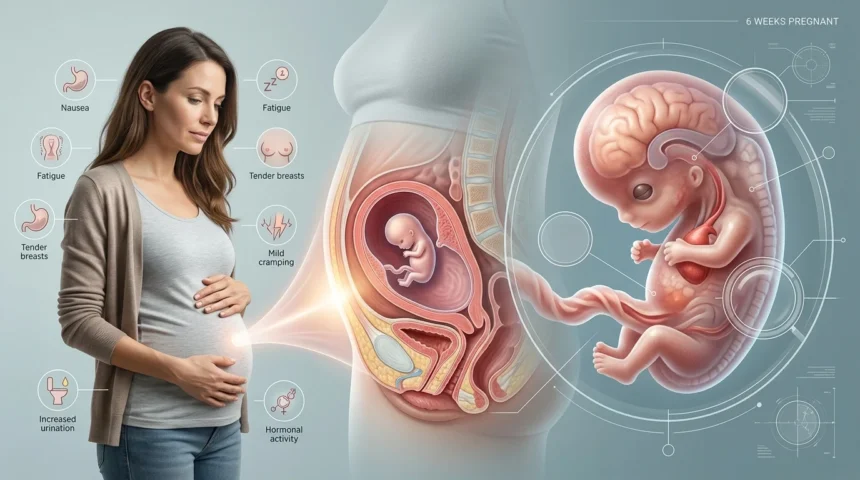
At 6 weeks pregnant, you’re still very early in your pregnancy, but important changes are already happening.
You may notice stronger pregnancy symptoms, while others may have few symptoms at all. It’s also around this time that some people have their first pregnancy ultrasound.
If you’re wondering what happens at 6 weeks, what your baby looks like, or whether bleeding is normal, you’re not alone.
Here’s what to know about being 6 weeks pregnant, including symptoms, ultrasound findings, baby development and when bleeding needs medical attention.
How Far Along Is 6 Weeks Pregnant?
Pregnancy is usually measured from the first day of your last menstrual period, rather than from the day conception occurred.
At 6 weeks pregnant, you’re in the first trimester.
Although you may think you’ve been pregnant for about six weeks, conception usually happened around two weeks after the start of your last period.
Your pregnancy is still in its early stages, but development is happening quickly.
6 Weeks Pregnant Symptoms
Some people notice several symptoms at 6 weeks, while others may have very few.
Common 6 weeks pregnant symptoms include:
- Nausea or vomiting
- Feeling unusually tired
- Sore or tender breasts
- Increased urination
- Bloating
- Mild cramping
- Food cravings or dislikes
- Increased sensitivity to smells
- Mood changes
- Headaches
- Constipation
- Increased vaginal discharge
You don’t need to have all of these symptoms to have a healthy pregnancy.
Morning sickness at 6 weeks
Nausea can become more noticeable around this stage of pregnancy.
Despite the name, morning sickness can happen at any time of day. Some people experience nausea without vomiting, while others have both.
Try eating smaller meals more frequently and drinking enough fluids. If you’re unable to keep liquids down, contact your healthcare professional.
Feeling tired
Extreme tiredness is common during early pregnancy.
Hormonal changes, including increasing levels of progesterone, can contribute to feeling sleepy or exhausted.
Getting enough rest and eating regular, nutritious meals may help you manage your energy levels.
Baby at 6 Weeks Pregnant
So, what does the baby at 6 weeks pregnant look like?
At this stage, the developing embryo is still extremely small. It’s closer to the size of a small pea or a grain of rice than the size of a recognizable baby.
The embryo is developing rapidly, and important structures are beginning to form.
The early development includes structures that will eventually become:
- The brain and nervous system
- The spinal cord
- The heart
- The digestive system
- The arms and legs
The shape is still very different from the baby you’ll see later in pregnancy.
That’s completely normal at this stage.
What Happens to the Baby at 6 Weeks?
At around six weeks, the embryo is going through several important developmental changes.
The neural tube, which eventually develops into the brain and spinal cord, is forming.
The early heart structure is also developing, although what can be seen or detected on an ultrasound varies depending on the exact timing of pregnancy and the equipment used.
Small structures that will eventually develop into the arms and legs are also beginning to appear.
Because development happens quickly during the first trimester, even a few days can make a difference in what is visible during an ultrasound.
6 Weeks Pregnant Ultrasound
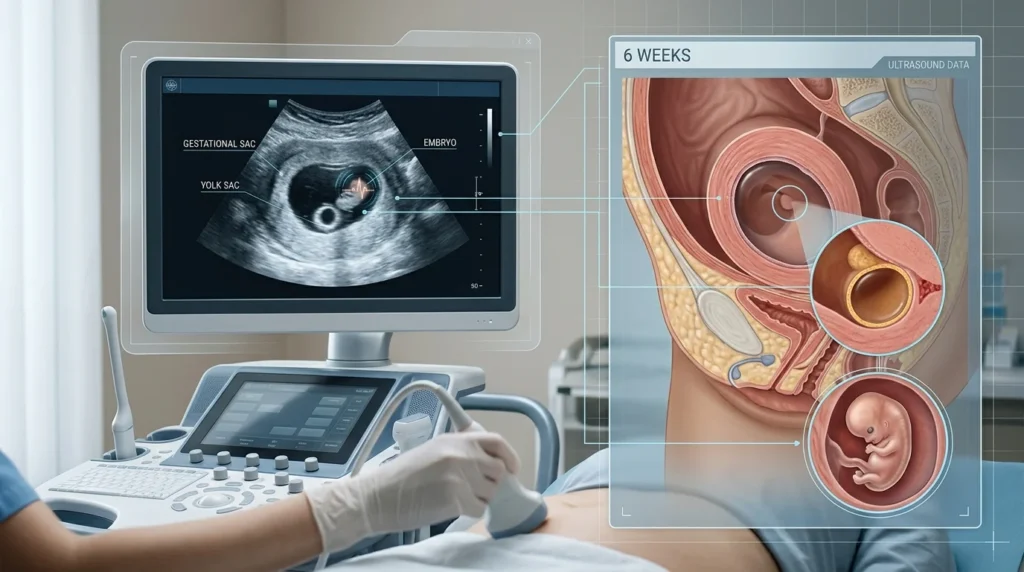
An ultrasound at this stage can provide useful information, but don’t be surprised if the scan doesn’t look like what you expected.
During a 6 weeks pregnant ultrasound, a healthcare professional may look for signs of an early pregnancy inside the uterus.
Depending on the exact gestational age, the type of ultrasound and individual circumstances, an ultrasound may show:
- Gestational sac
- Yolk sac
- Embryo or fetal pole
- Developing cardiac activity
Not every pregnancy will show all of these findings at exactly six weeks.
Why might the ultrasound look different from what I expected?
Pregnancy dating isn’t always exact.
Ovulation may have occurred later than expected, or implantation may have happened at a different time. This means someone who believes they’re six weeks pregnant may actually be slightly earlier in pregnancy.
For this reason, not seeing an embryo or heartbeat at an early scan doesn’t automatically mean something is wrong.
Your healthcare professional may recommend another ultrasound after some time if the findings are not yet conclusive.
Ultrasound at 6 Weeks Pregnant and Heartbeat
One of the biggest questions people have is whether they should see or hear a heartbeat at six weeks.
Cardiac activity may be detectable around this stage, but the timing varies.
It depends on factors such as:
- Exact gestational age
- Timing of ovulation
- Implantation
- Type of ultrasound
- Position of the pregnancy
- Image quality
A transvaginal ultrasound can provide a clearer view during very early pregnancy than an abdominal ultrasound in many cases.
If cardiac activity isn’t detected during an early scan, your healthcare professional may recommend a follow-up ultrasound rather than making a conclusion from one early examination.
What Is a 6 Weeks Pregnant Ultrasound Like?
Early pregnancy ultrasounds are often performed using a transvaginal ultrasound because the pregnancy is still very small.
During this type of examination, a slim ultrasound probe is gently inserted into the vagina to obtain images of the uterus and developing pregnancy.
It may feel uncomfortable for some people, but it generally doesn’t take very long.
Your healthcare professional may use the scan to check:
- Whether the pregnancy is inside the uterus
- Gestational age
- Development of the pregnancy
- Number of pregnancies
- Whether cardiac activity is visible
- Whether there are findings that require follow-up
Bleeding at 6 Weeks Pregnant
Bleeding at 6 weeks pregnant can be frightening.
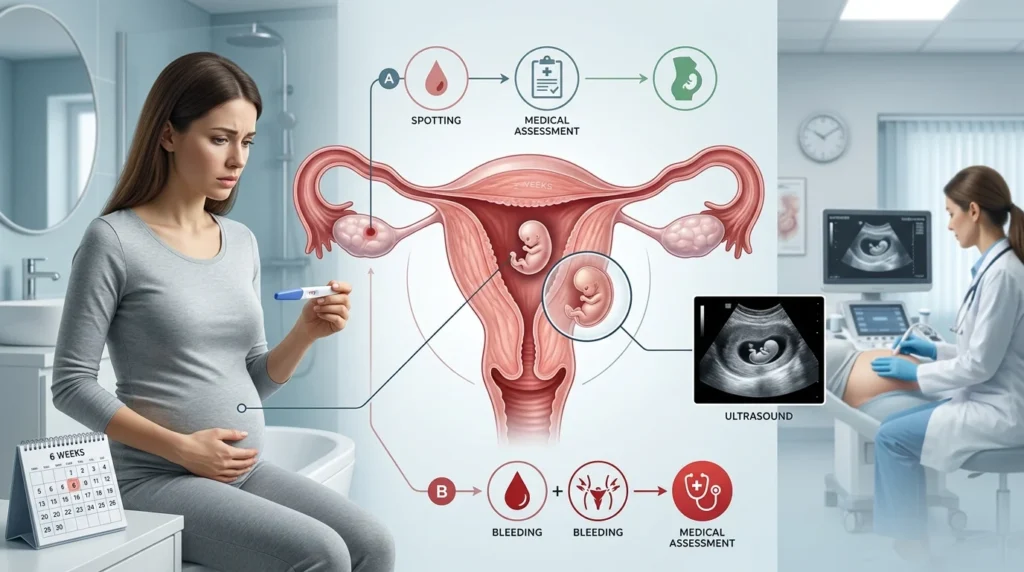
Some people experience light spotting during early pregnancy and continue to have a healthy pregnancy. However, bleeding can also be associated with miscarriage or other pregnancy complications.
That’s why bleeding shouldn’t simply be ignored.
The amount, color, duration and whether you have pain can all provide useful information to a healthcare professional.
What can cause bleeding in early pregnancy?
Possible causes include:
- Cervical changes
- Minor irritation
- Implantation-related bleeding in very early pregnancy
- Subchorionic bleeding
- Miscarriage
- Ectopic pregnancy
- Other causes
It’s not possible to determine the cause based on the amount or color of blood alone.
If you’re pregnant and experiencing bleeding, contact your healthcare professional for advice.
Is Spotting at 6 Weeks Pregnant Normal?
Light spotting doesn’t always mean that you’re having a miscarriage.
Some pregnant people experience spotting and go on to have a healthy pregnancy.
However, bleeding during pregnancy should still be discussed with a healthcare professional, particularly if it is new or unexplained.
Heavy bleeding, severe abdominal or pelvic pain, shoulder pain, dizziness, fainting or feeling very unwell requires urgent medical attention.
These symptoms can sometimes occur with serious pregnancy complications, including ectopic pregnancy.
Miscarriage at 6 Weeks Pregnant
Miscarriage can occur during early pregnancy, and it can be emotionally difficult.
A miscarriage means a pregnancy ends before the fetus can survive outside the uterus.
Possible symptoms can include:
- Vaginal bleeding
- Increasing abdominal or pelvic cramps
- Passing tissue or fluid
- A decrease in pregnancy symptoms
However, symptoms alone can’t confirm a miscarriage.
For example, pregnancy symptoms can naturally change from day to day. Similarly, light bleeding doesn’t automatically mean that a miscarriage has occurred.
A healthcare professional may use an ultrasound and, in some situations, blood tests to determine what’s happening.
What Does a Miscarriage Look Like on a 6 Weeks Pregnant Ultrasound?
If you’re searching for a miscarriage 6 weeks pregnant ultrasound, it’s important to understand that an ultrasound isn’t interpreted based on one visual feature alone.
Healthcare professionals look at specific measurements and developmental findings.
An ultrasound may help determine whether:
- A pregnancy is present inside the uterus
- An embryo has developed
- The pregnancy is developing appropriately for its estimated age
- Cardiac activity is present when expected
- Findings meet established criteria for pregnancy loss
Sometimes an early ultrasound doesn’t provide enough information to make a definite diagnosis.
In that situation, a repeat ultrasound after an appropriate interval may be recommended.
Don’t diagnose a miscarriage from an ultrasound picture online
Online images can be useful for education, but they can’t tell you what is happening in your individual pregnancy.
If you’ve had an ultrasound and you’re worried about the results, discuss the report with your healthcare professional.
6 Weeks Pregnant With No Symptoms
Not everyone experiences strong pregnancy symptoms.
You can be 6 weeks pregnant and have few or no noticeable symptoms.
Pregnancy symptoms can vary widely from one person to another. Some people have significant nausea and fatigue, while others feel relatively normal during early pregnancy.
The presence or absence of symptoms alone doesn’t tell you whether a pregnancy is developing normally.
If you’re concerned because your symptoms suddenly changed, contact your healthcare professional.
What Should You Do at 6 Weeks Pregnant?
This is a good time to focus on early prenatal care.
Take a prenatal vitamin
A prenatal vitamin containing folic acid is commonly recommended during pregnancy. Your healthcare professional can advise you about the appropriate supplement and dose for your circumstances.
Avoid alcohol and smoking
Alcohol and tobacco can affect pregnancy development. Avoiding them is an important part of prenatal care.
Be careful with medications
Don’t assume that a medication is safe simply because it’s available without a prescription.
Check with your doctor or pharmacist before starting, stopping or changing medicines during pregnancy.
Arrange prenatal care
If you haven’t already, arrange an appointment with a healthcare professional who can guide you through your pregnancy.
When Should You Seek Urgent Medical Care?
Contact a healthcare professional promptly if you experience bleeding during early pregnancy.
Seek urgent medical attention if you have:
- Heavy vaginal bleeding
- Severe abdominal or pelvic pain
- Pain mainly on one side
- Shoulder-tip pain
- Fainting or severe dizziness
- Significant weakness
- Severe vomiting with inability to keep fluids down
- Severe pain with bleeding
These symptoms can sometimes indicate a serious complication that needs immediate assessment.
Frequently Asked Questions About Being 6 Weeks Pregnant
What are the most common 6 weeks pregnant symptoms?
Common symptoms include nausea, fatigue, tender breasts, increased urination, bloating, mild cramping, food changes and increased sensitivity to smells. Some people have few or no symptoms.
What should I see on a 6 weeks pregnant ultrasound?
Depending on the exact timing and type of scan, an ultrasound may show a gestational sac, yolk sac, embryo and possibly cardiac activity. Findings vary because pregnancy dating isn’t always exact.
Can you see the baby at 6 weeks pregnant?
The embryo is visible in some pregnancies during an ultrasound at around six weeks, but it is extremely small. It won’t yet look like a developed baby.
Can you hear a heartbeat at 6 weeks?
Cardiac activity may be detectable around six weeks, particularly with a transvaginal ultrasound, but it isn’t guaranteed at exactly six weeks. A difference of only a few days in pregnancy dating can affect what is visible.
Is bleeding at 6 weeks pregnant always a miscarriage?
No. Light bleeding or spotting can occur for several reasons, and some people who experience early pregnancy bleeding continue to have healthy pregnancies. However, bleeding should be discussed with a healthcare professional.
What does a miscarriage look like on an ultrasound at 6 weeks?
A healthcare professional looks for specific ultrasound findings and measurements rather than relying on a single visual appearance. Sometimes a repeat scan is needed before a diagnosis can be made.
How big is the baby at 6 weeks?
The developing embryo is very small at six weeks, generally only a few millimeters in length. Exact measurements can vary depending on the dating of the pregnancy.
Is cramping normal at 6 weeks pregnant?
Mild cramping can occur during early pregnancy. However, severe, persistent or one-sided pain, especially when accompanied by bleeding, requires medical assessment.
What if I have no pregnancy symptoms at 6 weeks?
That’s possible. Pregnancy symptoms vary considerably, and some people have very few symptoms during early pregnancy. If you have concerns about your pregnancy, speak with your healthcare professional.
The Bottom Line
Being 6 weeks pregnant can bring a lot of questions. You may have nausea, fatigue and breast tenderness, or you may barely notice any symptoms yet.
Your baby is still extremely small, but major developmental changes are already underway. A 6 weeks pregnant ultrasound may show early pregnancy structures and possibly cardiac activity, although what can be seen varies with pregnancy dating and the type of scan.
If you experience bleeding at 6 weeks pregnant, don’t automatically assume that you’ve had a miscarriage. Early pregnancy bleeding has several possible causes, but it should be evaluated, particularly when accompanied by pain.
And if you experience heavy bleeding, severe pain, fainting, dizziness or other concerning symptoms, seek urgent medical care.
Medical Resources
For additional information about early pregnancy, pregnancy symptoms, prenatal care, and warning signs, see:
- NHS — 6 weeks pregnant: Information about common symptoms and what happens during week 6 of pregnancy. NHS 6 weeks pregnant guide
- NHS — Vaginal bleeding in pregnancy: Information about spotting and bleeding during pregnancy, possible causes, testing, and symptoms that require urgent medical attention. NHS vaginal bleeding in pregnancy
- NHS — Early pregnancy symptoms: Overview of common pregnancy symptoms, including nausea, tiredness, breast tenderness, increased urination, constipation, and vaginal discharge. NHS pregnancy symptoms guide
- CDC — Healthy pregnancy: Guidance on prenatal health, folic acid, lifestyle, medications, and substances during pregnancy. CDC healthy pregnancy information
- CDC — Folic acid: Information about the importance of folic acid during early pregnancy and the recommendation of 400 mcg daily for women who could become pregnant. CDC folic acid guidance
The information in this article is provided for general educational and informational purposes only. It is not intended to replace medical advice, diagnosis, or treatment from a qualified healthcare professional.
