

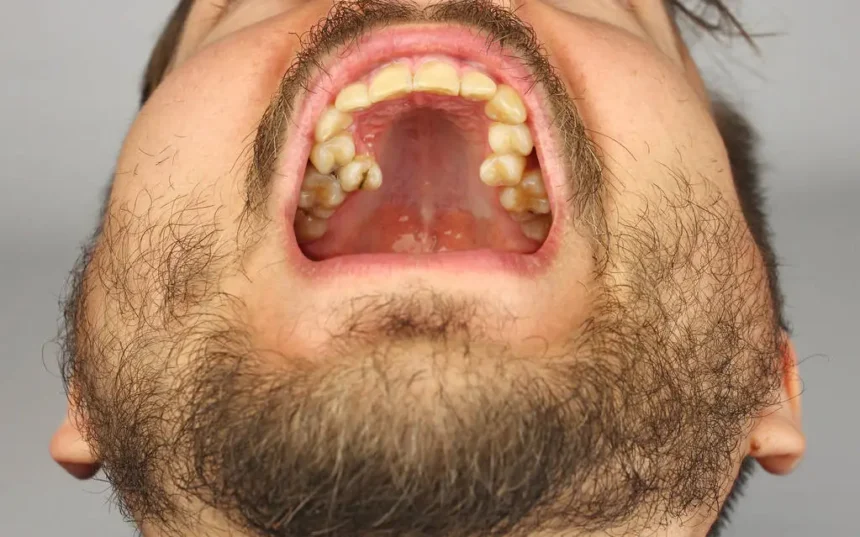
Caught a glimpse of your palate in the mirror and thought, wait, is that supposed to be yellow? It’s a strange thing to notice about yourself, and it’s easy to spiral into worst-case thinking. Take a breath — in most cases, a yellow roof of the mouth comes down to something simple like dry mouth, a bit of staining, or a canker sore, not anything serious.
Still, a change in color is your body’s way of flagging something, so it’s worth understanding what’s actually going on. Below, we’ll cover why the roof of your mouth might look yellow, whether any yellowing is actually normal, how to get rid of it, and the handful of signs that mean it’s time to see a doctor or dentist instead of waiting it out.
Is the Roof of Your Mouth Supposed to Be Yellow?
A healthy palate is normally a pale pink to light red color, not yellow. That said, a small amount of yellow isn’t automatically a problem. Many people have tiny, painless, pale-yellow bumps called Fordyce granules scattered across the roof of their mouth or inner cheeks — these are just visible oil glands, completely harmless, and something you were likely born with rather than something new.
So is it normal for the roof of your mouth to be yellow? A few small dots, probably nothing. A wide yellow film, patch, or coating that showed up recently is a different story, and that’s what the rest of this guide focuses on.
Why Does the Roof of My Mouth Look Yellow?

A yellowing on the roof of the mouth usually comes from one of two things: something sitting on top of the tissue, like a stain or coating, or a change happening inside the tissue itself, like inflammation, dryness, or an infection. Here are the causes seen most often, starting with the most common.
1. Plaque and Poor Oral Hygiene
When brushing and flossing slip, bacteria and food debris build up on the roof of the mouth and around the teeth. That buildup can take on a yellowish tint, especially first thing in the morning.
- Often paired with bad breath or a filmy feeling in the mouth
- Usually improves within days of better brushing, flossing, and tongue cleaning
2. Dry Mouth (Xerostomia)
Saliva does a lot of quiet work protecting your mouth from bacteria. When you’re dehydrated, breathing through your mouth at night, or dealing with a medical condition that reduces saliva, the tissue on your palate can look dry, dull, and yellowish.
- Often comes with a sticky feeling, bad breath, or a dry throat
- Usually clears up once hydration and saliva flow improve
3. Food and Drink Staining
Turmeric, curry, coffee, tea, and brightly colored candy are common culprits. These stains sit on the surface and typically fade within a day or two of normal brushing.
4. Smoking or Tobacco Use
Tobacco tar and nicotine coat the soft tissue of the mouth over time, including the palate, leaving a yellowish or brownish tint that builds up gradually with regular use.
5. Oxidizing Mouthwash
Mouthwashes containing hydrogen peroxide or similar oxidizing agents can temporarily bleach or discolor the roof of the mouth and tongue. Switching mouthwash usually resolves it within a few days.
6. Bismuth-Containing Medications
Medications like Pepto-Bismol contain bismuth subsalicylate, which can react with sulfur compounds in your mouth and temporarily turn the tongue and palate yellow or even black. It’s harmless and fades once you stop taking the medication.
7. Vitamin B12 or Zinc Deficiency
Low levels of certain vitamins, particularly B12, can affect how healthy your oral tissue looks and may contribute to a yellowish or pale appearance on the palate, sometimes along with a sore or unusually smooth tongue.
8. Oral Thrush
Oral thrush is a yeast infection that shows up as creamy yellow-white patches, often on the tongue and roof of the mouth. It’s more common after a course of antibiotics, with certain inhaled steroids, in denture wearers, or with a weakened immune system.
- Patches can often be wiped away, leaving a sore, red surface underneath
- Usually comes with a burning feeling or a loss of taste
- Needs an antifungal treatment — it won’t clear up alone
9. Canker Sores
Canker sores can appear white, pale yellow, or pink with a red border. When one lands on the roof of the mouth, it can make that whole area look slightly yellow up close. They’re painful but harmless, and heal within one to two weeks.
10. Oral Herpes (Cold Sores)
Cold sores, caused by the HSV-1 virus, can form pus-filled, yellowish blisters on the palate, sometimes preceded by a tingling or itching feeling. Unlike canker sores, these are contagious.
11. Strep Throat or Pharyngitis
A bacterial throat infection like strep can cause a buildup of bacteria and pus that gives the back of the palate a yellowish tint, usually alongside a sore throat, pain swallowing, and sometimes a fever.
12. Tooth or Gum Abscess
An infected tooth or gum pocket can cause a pus-filled swelling that pushes up against the roof of the mouth, giving it a yellowish, swollen look near the affected tooth. This needs dental treatment, not home care.
13. Healing After a Burn (“Pizza Burn”)
A burn from hot food or drink can peel the top layer of tissue on the palate. As it heals over the following days, the surface often looks yellow-white before returning to normal.
14. Jaundice (Rare, but Serious)
Jaundice happens when a yellow pigment called bilirubin builds up in the blood, usually due to a liver or gallbladder problem. It can turn the roof of the mouth yellow, but it almost always shows up alongside yellowing of the eyes and skin too. If you notice yellow eyes along with a yellow palate, see a doctor promptly.
15. Leukoplakia (Rare, but Needs Checking)
Leukoplakia causes thick, yellow-white patches that can’t be wiped away, most often linked to smoking or long-term irritation. It’s usually harmless but is monitored closely because, rarely, it can turn into oral cancer. Any patch like this deserves a professional look.
Yellow Roof of Mouth: Quick Comparison
| Cause | What It Looks Like | Wipes Off? | Painful? | Needs a Doctor? |
| Plaque buildup | Yellow film, worse in the morning | Yes, with brushing | No | Not usually |
| Dry mouth | Dull, sticky, yellowish tissue | No | No | If persistent |
| Food/drink staining | Even yellow tint | Yes, fades fast | No | No |
| Smoking/tobacco | Yellow-brown coating | Partially | No | For cessation support |
| Oral thrush | Creamy yellow-white patches | Yes, leaves it red/sore | Burning | Yes |
| Canker sore | Small pale-yellow ulcer | No | Yes | If lasts 3+ weeks |
| Cold sore | Yellow, pus-filled blister | No | Yes | If severe/recurring |
| Strep throat | Yellow tinge, back of palate | No | Sore throat | Yes |
| Tooth/gum abscess | Yellow, swollen, near a tooth | No | Yes, often severe | Yes, urgently |
| Fordyce granules | Tiny pale-yellow dots | No | No | No — normal |
| Jaundice | Yellow palate + yellow eyes/skin | No | Varies | Yes, promptly |
| Leukoplakia | Thick yellow-white patch | No | Usually not | Yes, to monitor |
Surface Stain or Tissue Change? A Simple Way to Tell
One useful trick: try gently wiping the yellow area with a clean, damp gauze pad or soft toothbrush. If it wipes away easily, you’re likely looking at a surface issue — plaque, staining, or early thrush. If it doesn’t budge, or it leaves a raw, red patch underneath, that points toward something happening in the tissue itself, like healing skin, inflammation, or infection, and it’s worth getting checked rather than scrubbing harder.
How to Get Rid of a Yellow Roof of Mouth
For the common, harmless causes, a few simple changes usually clear things up within a few days to two weeks:
- Brush your teeth and gently brush or scrape your tongue and palate twice a day
- Rinse with warm salt water to reduce bacteria and soothe irritation
- Drink more water throughout the day to keep saliva flowing
- Cut back temporarily on turmeric, coffee, tea, or strongly colored foods if staining is the cause
- Switch to a gentle, alcohol-free mouthwash instead of an oxidizing one
- Cut down on or quit smoking and tobacco products
- Eat more foods rich in B12 and zinc, like eggs, meat, dairy, and leafy greens
- See a dentist for an antifungal treatment if you suspect oral thrush
None of these home steps are a substitute for treating an underlying infection, abscess, or systemic condition — they help with the everyday causes, not the ones that need a professional diagnosis.
When to See a Doctor or Dentist
- The yellowing has lasted more than one to two weeks despite better hygiene
- It’s painful, swollen, or making it hard to eat, swallow, or talk
- You also notice yellow eyes or yellowing skin — get this checked promptly, as it can point to a liver issue
- There’s a fever, sore throat, or a bad taste that won’t go away
- You see a thick white-yellow patch that won’t wipe off
- The area bleeds easily or keeps coming back in the same spot
- You smoke or use tobacco and notice any new or unusual patch
Frequently Asked Questions
How do I get rid of a yellow roof of mouth?
Start with the basics: brush and clean your tongue and palate twice a day, drink more water, cut back on staining foods and tobacco, and switch to a gentle mouthwash. If it’s still yellow after one to two weeks, or you suspect thrush, an infection, or an abscess, see a dentist or doctor rather than continuing to self-treat.
Why does the roof of my mouth look yellow?
Most of the time it’s something simple on the surface — plaque, dry mouth, staining from food or tobacco, or healing tissue after a burn. Less often, it’s an infection like thrush or strep throat, or in rare cases, a sign of jaundice or leukoplakia.
Is the roof of your mouth supposed to be yellow?
No, not as a general rule — a healthy palate is pale pink to light red. Small, scattered yellow dots (Fordyce granules) are a normal exception. A widespread or new yellow tint usually points to one of the causes above.
Is it normal for the roof of the mouth to be yellow?
A little yellow from tiny Fordyce granules is normal and nothing to worry about. A noticeable yellow film, patch, or coating that’s new isn’t the norm and is worth paying attention to, even if it usually turns out to be something minor.
Can dehydration cause a yellow roof of mouth?
Yes. Not drinking enough water reduces saliva flow, and saliva is what keeps bacteria in check and the tissue looking healthy. Catching up on fluids often improves the color within a day or two.
Is a yellow roof of mouth a sign of liver problems?
It can be, but only in the context of jaundice, which almost always comes with yellow eyes and yellow skin as well. A yellow palate on its own, with no other yellowing anywhere else, is far more likely to be a local, harmless cause.
Can stress cause the roof of my mouth to look yellow?
Stress doesn’t directly turn the palate yellow, but it’s a well-known trigger for canker sores and can contribute to dry mouth, both of which can make the area look yellowish.
How long does it take for a yellow roof of mouth to go back to normal?
Surface causes like staining or mild irritation often clear within one to three days. Canker sores and healing burns typically take one to two weeks. Thrush or infections need treatment and usually improve within a week of starting it.
| This article is for general information only and isn’t a substitute for a diagnosis from a dentist or doctor. If the yellowing is persistent, painful, or paired with yellow eyes or skin, please get it checked in person. |

Dr. Harleen Grewal, DDS, is an award-winning pediatric and family dentist in Santa Clarita, CA. Founder of Skyline Smiles, she specializes in kids’ dentistry, cosmetic care & sedation.