

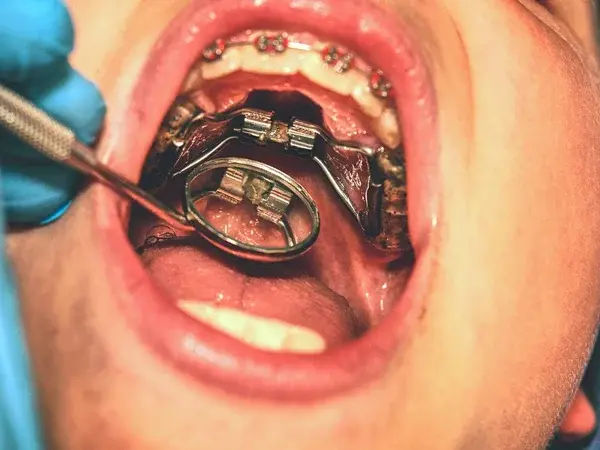
Notice a bump on the roof of your mouth and now you can’t stop poking at it with your tongue? Same. Once you know something’s there, it’s almost impossible to leave it alone, and that alone can make it feel bigger and scarier than it really is.
Here’s the reassuring part: a bump on the roof of your mouth is usually not a big deal. Most of the time it’s a canker sore, a small cyst, a burn from hot food, or a bony bump you’ve actually had for years without ever noticing it. Still, it helps to know what you’re looking at. Below, we’ll go through the most common causes of a bump on the roof of the mouth, what it means if a doctor calls it a nodule in the roof of the mouth, and the signs that tell you it’s time to get it looked at.
Quick Anatomy: What’s Actually Up There
The roof of your mouth, or palate, has two parts, and knowing the difference helps explain why bumps behave differently depending on where they sit.
- Hard palate: the bony front two-thirds, right behind your front teeth. Most of the causes below — canker sores, cysts, torus palatinus — show up here.
- Soft palate: the fleshier back third, near your throat. Bumps here are less common and more often tied to infections like strep throat.
If you’re not sure which part you’re feeling, run your tongue back slowly — the switch from firm and bony to soft and flexible is easy to notice once you’re paying attention.
What Usually Causes a Bump on the Roof of the Mouth?
A mouth lump on the roof of the mouth can show up for all kinds of reasons — everything from biting into pizza that was too hot, to a bone structure you were simply born with. Here are the causes dentists and doctors see most often, roughly in order of how common they are.
1. Canker Sore
Canker sores are small, round sores that can pop up almost anywhere inside your mouth, including the roof. They’re not caused by a virus — stress, a minor bite or scrape, acidic food, or even a vitamin deficiency can trigger one.
- Usually white, yellow, or pale pink with a red border
- Stings, especially with spicy or acidic food
- Not contagious
- Clears up in about one to two weeks on its own; large ones can take up to four
2. Mucocele (a Fluid-Filled Bump)
A mucocele forms when a small salivary gland gets blocked or irritated, so fluid builds up under the surface instead of draining normally.
- Soft, smooth, dome-shaped, and usually see-through or bluish
- Almost always painless unless it’s bitten or irritated
- Can last anywhere from a few days to a few years if left alone
- Often bursts on its own while eating, then heals within days
3. Torus Palatinus (a Bony Bump)
If the bump feels hard as bone rather than soft, you might be dealing with torus palatinus — a bony ridge that forms right in the middle of the hard palate. Studies estimate it shows up in roughly 2 to 3 out of every 100 people, and it’s more common in women.
- Rock-hard to the touch, unlike every other cause on this list
- Sits in the exact center of the palate
- Grows slowly over years, or is present from birth
- Only treated if it interferes with dentures, speech, or chewing
4. Cold Sore
Cold sores are caused by the herpes simplex virus and are contagious, unlike canker sores.
- Starts as tingling or burning before any blister appears
- Turns into a small, fluid-filled blister that can crust over
- Usually clears in two to three weeks
- Antiviral creams or prescription pills can shorten healing time
5. Burn or Irritation
This one’s probably familiar: a slice of pizza, a cup of coffee, or a spoonful of soup that was hotter than expected can leave the roof of your mouth swollen, red, and tender for a day or two. Sharp foods like chips or crackers can scratch the same area. Both usually heal on their own within a few days once you stop irritating the spot.
6. Oral Thrush
Oral thrush is a yeast infection that shows up as creamy white patches, sometimes with a bit of swelling underneath. It’s more common in babies, older adults, denture wearers, and anyone with a weakened immune system.
- Patches can often be wiped away, leaving red, sore skin underneath
- Mild burning sensation is common
- Doesn’t clear up on its own — needs an antifungal from a doctor or dentist
7. Nasopalatine Duct Cyst
This is one cause of a lump inside the roof of the mouth that sits a little deeper than the others. It develops in the area right behind your two front teeth, from tissue left over from before you were born. Small ones often go unnoticed for years. Larger ones can cause swelling or discomfort and may need to be drained or removed by an oral surgeon.
8. Hyperdontia (Extra Teeth)
Hyperdontia means you’re growing more teeth than you should have, and most of those extras show up right behind your front teeth, in the roof of your mouth. It can come with facial pain, jaw pain, or headaches, though plenty of people have no symptoms at all until a dental X-ray spots it.
9. Ectopic Tooth
Slightly different from hyperdontia, an ectopic tooth is a normal tooth that simply grows in the wrong place — sometimes straight up into the palate instead of down through the gums. It’s uncommon, but when it happens, it can feel exactly like a firm bump. Again, an X-ray settles this quickly.
10. Oral Fibroma
An oral fibroma is a small, firm, painless lump made of scar-like tissue. It usually forms after repeated irritation — think a rough retainer, a mouthguard that rubs, or frequent canker sores in the same spot. These lumps are permanent but harmless, and most people just leave them alone unless they’re bothersome.
11. Squamous Papilloma (HPV-Related)
A squamous papilloma is a small, painless, cauliflower-shaped growth caused by a strain of HPV. It’s benign and grows slowly, though a larger one can make biting or eating a little uncomfortable. If it’s bothersome, a dentist or oral surgeon can remove it in a short procedure.
12. Strep Throat (Petechiae)
If the bump looks more like a cluster of tiny red spots than a single lump, and you also have a sore throat, it might not be a bump at all — it could be petechiae, small red marks caused by a strep throat infection. Other clues include a sudden fever, a swollen uvula (the dangly bit at the back of your throat), and redness without a cough. This one needs antibiotics from a doctor, not home care.
13. Epstein Pearls (in Babies)
If you’re looking at your baby’s mouth rather than your own, small whitish-yellow bumps on the gums or roof of the mouth are most likely Epstein pearls. They’re extremely common in newborns, often mistaken for teeth coming in early, and completely harmless. They usually disappear on their own within the first three months.
14. Rare Cause: Oral Cancer
This is the cause everyone worries about, so it’s worth being direct: oral cancer on the hard palate is rare. Most bumps in this area are completely benign. Warning signs to actually take seriously include a sore that doesn’t heal after two to three weeks, a lump that keeps growing, bleeding without an obvious reason, numbness, or an open ulcer with hard, raised edges. Smoking and heavy alcohol use raise the risk. Catching anything early is always the safer move.
Quick Comparison: Common Causes at a Glance
| Cause | What It Feels Like | Painful? | Goes Away Alone? | See a Doctor If |
| Canker sore | Small, round, shallow sore | Yes, mild | Yes, 1–2 weeks | Lasts 3+ weeks |
| Mucocele | Soft, smooth, dome-shaped | Usually not | Often | Keeps returning |
| Torus palatinus | Hard, bony, in the midline | No | N/A — it’s normal | Interferes with dentures |
| Cold sore | Fluid-filled blister | Yes | Yes, 7–10 days | Spreads or won’t heal |
| Burn/irritation | Red, swollen patch | Yes, mild | Yes, few days | Signs of infection |
| Oral thrush | Creamy white patches | Mild burning | No | Always — needs meds |
| Nasopalatine cyst | Bump behind front teeth | Usually not | Not usually | Grows or gets sore |
| Oral fibroma | Firm, smooth, painless | No | No — permanent | Bothersome size |
| Squamous papilloma | Small, cauliflower-shaped | No | No | Grows large, uncomfortable |
| Strep throat spots | Tiny red dots, not one lump | Sore throat | With antibiotics | Fever, no cough |
| Epstein pearls (babies) | Tiny white-yellow bumps | No | Yes, within 3 months | Persists past 3 months |
How to Check a Bump on the Roof of Your Mouth Yourself
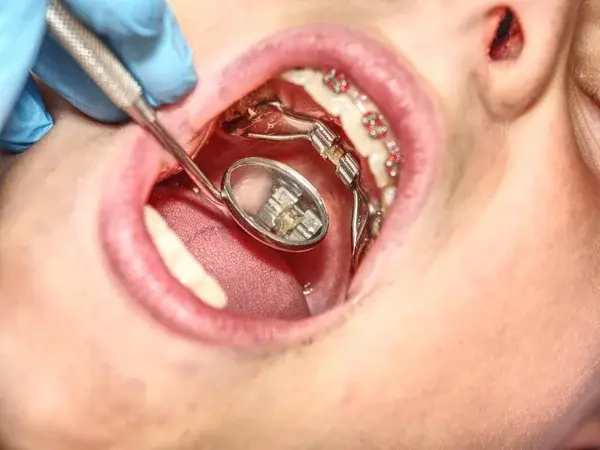
Before you call anyone, a quick self-check at home can help you describe what’s going on more clearly — and sometimes tells you right away that it’s nothing to worry about.
- Use a flashlight and a small mirror, or your phone’s camera on selfie mode
- Gently dry the area with a tissue so you can see it clearly, not just feel it
- Check the color: white, yellow, red, clear, and skin-colored all point to different causes
- Press very lightly — is it soft and squishy, or hard like bone?
- Note the size in millimeters if you can, so you can track any change
- Take a photo today, and another in a week, to compare side by side
- Write down when it started and what you were eating or doing beforehand
Bumps on the Roof of the Mouth in Babies and Toddlers
If it’s your child’s mouth you’re checking, the usual suspects are different. Epstein pearls are the most common bump parents notice in newborns, and they’re completely normal. Teething can also cause small, tender bumps along the gums that sometimes extend toward the palate. What’s not normal: a bump that’s growing, discolored, bleeding, or paired with a fever or trouble feeding — any of those call for a pediatrician or pediatric dentist, not a wait-and-see approach.
Common Myths About Mouth Bumps
Myth: Any bump in your mouth means cancer
Fact: Oral cancer accounts for a small fraction of mouth bumps. Canker sores, cysts, and bony growths are far more common causes.
Myth: If it doesn’t hurt, it’s nothing to worry about
Fact: It’s actually the opposite that raises concern — many early oral cancers are painless. Pain (or lack of it) alone isn’t a reliable way to rule anything out.
Myth: Torus palatinus is a sign something’s wrong with your bones
Fact: It’s a normal variation, not a disease or a symptom of a bone condition. Plenty of people live their whole lives with one and never need treatment.
Myth: You should pop or drain a mouth bump yourself
Fact: Popping a mucocele or cyst yourself raises the risk of infection and can make it come back worse. Let it resolve on its own or have a professional handle it.
How to Lower Your Risk of Getting Bumps on the Roof of Your Mouth
- Let hot food and drinks cool for a minute before eating
- Avoid chewing on hard, sharp, or crunchy foods when your mouth already feels sensitive
- Keep up with brushing, flossing, and regular dental checkups
- Get a properly fitted mouthguard or retainer if yours rubs or irritates your palate
- Manage stress where you can — it’s a known canker sore trigger
- Stay hydrated, since a dry mouth heals more slowly and irritates more easily
- Avoid tobacco, which raises the risk of several mouth conditions including cancer
Nodule in the Roof of the Mouth: Is That Different From a Bump?
Not really. “Nodule” is just the word a doctor or dentist might use instead of “bump” — it usually describes something small, firm, and well-defined, as opposed to a soft swelling. If you’ve been told you have a nodule in the roof of your mouth, it’s simply medical language for the same kind of growth we’ve covered above, most often a fibroma, a cyst, or torus palatinus. The word itself isn’t a red flag — the size, texture, and how long it’s been there matter far more.
Lump Inside the Roof of Your Mouth: When It’s More Than Surface-Level
Most bumps sit right on the surface and are easy to see with a mirror. A lump inside the roof of the mouth that feels deeper — more like it’s under the tissue than on top of it — is more likely to be a cyst (like a nasopalatine duct cyst) or, rarely, a salivary gland growth. These deeper lumps are harder to diagnose just by looking, so a dentist will often want an X-ray or scan to see what’s underneath before deciding on next steps.
When to See a Dentist or Doctor
Most bumps on the roof of the mouth clear up without any help. Book an appointment if you notice any of the following:
- The bump hasn’t gone away after two to three weeks
- It’s getting bigger, or changing in color, shape, or texture
- It bleeds on its own, without you touching it
- It’s an open sore that isn’t healing
- Eating, swallowing, or talking has become genuinely painful
- Your dentures or retainer suddenly don’t fit right
- You have a fever, swollen glands, or a foul taste that won’t go away
- You’re having any trouble breathing
How to Treat a Bump on the Roof of Your Mouth at Home
For the harmless, everyday causes — a burn, a canker sore, mild irritation — a few simple habits can speed things along:
- Rinse with warm salt water two to three times a day
- Skip hot, spicy, salty, or acidic food until it heals
- Try an over-the-counter oral gel with benzocaine for pain relief
- Use a cold drink or ice chip to calm swelling right after a burn
- Keep brushing gently — don’t avoid the area completely
- Resist the urge to pop, pick, or bite at it
Frequently Asked Questions
Is a bump on the roof of my mouth serious?
Almost always, no. The vast majority of cases are canker sores, mucoceles, minor burns, or torus palatinus — none of which are dangerous. Serious causes exist but are rare.
How long does a bump on the roof of the mouth usually last?
Most heal within one to two weeks. Torus palatinus is the exception — it’s a permanent bony growth, not something that heals or disappears.
Can stress cause a bump on the roof of my mouth?
Yes, indirectly. Stress is one of the most common triggers for canker sores, which often show up on the palate.
Is a hard bump on the roof of my mouth always torus palatinus?
Not always, but it’s the most common explanation for a genuinely bone-hard bump in the middle of the palate. A dentist can confirm it in a single visit, often without any imaging.
When should I actually worry about a lump inside the roof of my mouth?
Worry less about the word “lump” and more about the pattern: anything that keeps growing, won’t heal after two to three weeks, or bleeds without cause is worth a professional look.
Why does the bump on the roof of my mouth hurt when I eat?
Pain while eating usually means the bump is close to the surface and getting irritated by food, temperature, or texture. Canker sores, burns, and fresh mucoceles are the most common reasons for this.
Can a bump on the roof of my mouth be from sinus problems?
Indirectly, yes. Sinus pressure and post-nasal drip can make the roof of your mouth feel swollen or tender, though this is more of a general achiness than an actual bump you can see or feel with your tongue.
Should I go to a dentist or a doctor for a bump on the roof of my mouth?
A dentist is usually the right first call, since most causes are dental in nature and they can often diagnose it in one visit, sometimes with an X-ray. If it comes with a fever, sore throat, or looks like an infection spreading, a doctor is the better first stop.
Is it normal for a bump on the roof of my mouth to come and go?
Yes, for some causes. Canker sores and mucoceles can flare up, heal, and return later in the same general area, especially if the same trigger (stress, biting, a rough dental appliance) keeps happening.
| This article is for general information only and isn’t a substitute for a diagnosis from a dentist or doctor. If you’re worried about a bump in your mouth, especially one that isn’t improving, please have it examined in person. |

Dr. Harleen Grewal, DDS, is an award-winning pediatric and family dentist in Santa Clarita, CA. Founder of Skyline Smiles, she specializes in kids’ dentistry, cosmetic care & sedation.