

Wisdom tooth pain usually comes from one of four things: the tooth is still pushing through the gum (eruption pain), it’s impacted against another tooth, it has a cavity, or the gum around it is infected. Mild, intermittent pain during eruption can often be managed at home for a few days. But pain that is severe, spreading to your jaw or ear, or paired with swelling, fever, or a bad taste usually means infection or impaction — and that needs a dentist, not home remedies.
Where Is Wisdom Tooth Pain Actually Felt?
Wisdom teeth sit at the very back of the upper and lower jaw, so the pain location is fairly distinct from a typical toothache. Most people describe it as a dull ache or sharp throb at the back corner of the jaw, often radiating outward.
| Location | What It Usually Means |
| Back of the jaw, behind the last molar | Most common site — eruption or impaction |
| Spreading to the ear or temple | Often impacted lower wisdom tooth pressing on nerve pathways |
| Jaw joint (TMJ) area | Tooth may be pushing at an angle, straining the jaw joint |
| Spreading to the throat or neck and swelling | Possible sign of infection — needs prompt dental review |
Why Wisdom Teeth Hurt So Much — Common Causes

1. Normal Eruption Pain
Wisdom teeth (third molars) typically emerge between ages 17 and 25. As they push through gum tissue, mild to moderate discomfort, gum tenderness, and pressure are normal. This is usually intermittent rather than constant.
2. Impaction
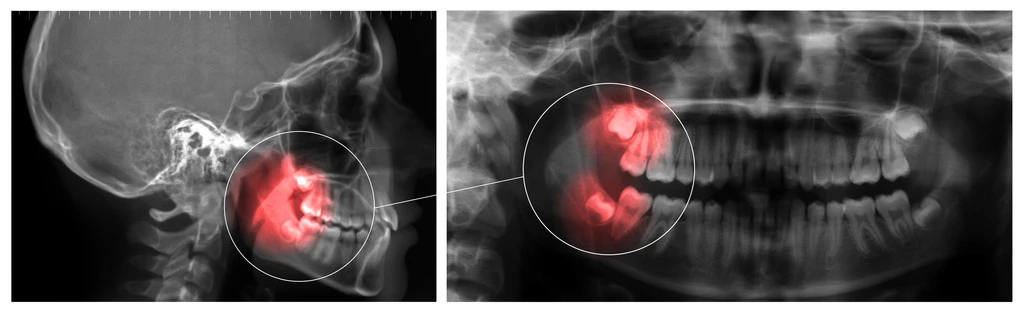
Many jaws don’t have room for a fourth set of molars, so the tooth gets stuck (impacted) against the molar in front of it, or angles sideways. Impacted wisdom teeth are one of the most common reasons dentists recommend wisdom tooth extraction, since an impacted tooth rarely resolves on its own and can damage the neighbouring tooth over time.
3. Wisdom Tooth Cavity
Wisdom teeth are hard to reach with a toothbrush, especially if they’re partially erupted, which makes a wisdom tooth cavity more likely than in other teeth. A cavity at the back of the mouth often goes unnoticed until it triggers sudden, sharp pain when chewing or with hot and cold food.
4. Infected Wisdom Tooth (Pericoronitis)
When a flap of gum partially covers an erupting wisdom tooth, food and bacteria can get trapped underneath it, leading to infection. This is one of the most common dental emergencies in young adults.
Wisdom Tooth Pain Symptoms — and How to Tell If It’s an Infection
Recognising the difference between normal growing pain and an infected wisdom tooth changes what you should do next.
| Symptom | Normal Eruption | Infected Wisdom Tooth |
| Pain pattern | Comes and goes, mild–moderate | Constant, often described as unbearable wisdom tooth pain |
| Gum appearance | Slightly red or tender | Swollen, red, sometimes with visible pus |
| Swelling | Minimal | Cheek or jaw swelling on the affected side |
| Taste/smell | Normal | Bad taste or odour from the area |
| Other symptoms | None | Fever, difficulty opening mouth, swollen lymph nodes |
| Duration | Days, in waves | Worsens without treatment |
If you notice the symptoms in the right-hand column, this points to an infected wisdom tooth, and antibiotics or drainage from a dentist are usually needed — home remedies alone won’t resolve an active infection.
How Long Does Wisdom Tooth Growing Pain Last?
Eruption pain typically comes in waves lasting 3 to 5 days at a time, then settles for a while as the tooth pauses its movement through the gum. The full eruption process, from the first twinge to the tooth fully breaking through, can take several months to a couple of years, often with multiple painful flare-ups along the way rather than one continuous stretch of pain. Pain that doesn’t ease after a week, or that keeps intensifying, is no longer typical “growing pain” and is worth having checked.
The Biggest Wisdom Tooth Myth
People often search for the “biggest wisdom tooth” out of curiosity after extraction — and it’s a fair question, since impacted wisdom teeth can look unusually large or oddly shaped on an X-ray because they’re often angled, fused, or have extra roots compared to a normally erupted tooth. Size and shape don’t indicate anything dangerous on their own; it’s the position and whether it’s causing crowding or infection that actually matters clinically.
Home Remedies for Wisdom Tooth Pain Relief
For mild eruption pain, these can help while you wait for an appointment or for the tooth to settle:
- Warm salt water rinse: ½ teaspoon of salt in warm water, rinsed gently 2–3 times a day, reduces bacteria and soothes inflamed gum tissue.
- Cold compress: applied to the outside of the jaw for 15-minute intervals to reduce swelling.
- Over-the-counter pain relief: ibuprofen or paracetamol as directed on the packaging, following dosing guidance from a source like the NHS.
- Clove oil: a small dab on the gum has mild numbing properties, used traditionally for tooth pain.
- Soft food and gentle brushing: reduces irritation to the area without skipping oral hygiene.
Important: home remedies for wisdom tooth pain are appropriate for mild, eruption-related discomfort only. They are not a treatment for infection, a cavity, or impaction, and shouldn’t be relied on for more than a few days.
How to Treat Swollen Gums Near a Wisdom Tooth
Swollen gum tissue around a partially erupted wisdom tooth (often the flap involved in pericoronitis) responds to a slightly different approach than general gum soreness:
- Rinse with warm salt water after every meal to flush out trapped food debris from under the gum flap
- Use an antiseptic mouthwash (chlorhexidine-based, if recommended by a dentist) to reduce bacterial load
- Avoid biting directly on the area, and avoid hard, crunchy, or sticky foods
- Don’t try to clean under the gum flap with sharp objects — this can worsen irritation
- See a dentist if swelling doesn’t improve within 2–3 days, or spreads to the cheek or jaw
Wisdom Tooth Extraction: What to Expect
Wisdom tooth extraction is recommended when a tooth is impacted, repeatedly infected, decayed, or crowding neighbouring teeth. The procedure ranges from a straightforward extraction (tooth fully erupted) to a surgical extraction (impacted, requiring an incision), generally performed under local anaesthetic, sometimes with sedation for more complex cases.
Wisdom Tooth Extraction Cost
Wisdom tooth extraction cost varies significantly depending on whether the tooth is simple or impacted, whether sedation is used, and your location. As a general guide:
| Extraction Type | Typical Cost Range (USD) |
| Simple extraction (fully erupted tooth) | $75 – $300 per tooth |
| Surgical extraction (impacted tooth) | $225 – $600 per tooth |
| With IV sedation or general anaesthesia | $300 – $800+ additional |
| All four wisdom teeth (surgical, with sedation) | $1,000 – $3,000+ total |
These are general ranges; actual pricing depends heavily on your country, the dental practice, and whether you have insurance. Always get a written quote during a consultation. You can compare verified, reviewed dentists and request an estimate by finding a dentist near you on Doctiplus.
When Wisdom Tooth Pain Is an Emergency
Most wisdom tooth pain can wait for a regular appointment. Get seen urgently if you notice:
- Unbearable wisdom tooth pain that doesn’t respond to over-the-counter pain relief
- Facial swelling, especially if it’s spreading or affecting your eye
- Fever, chills, or feeling generally unwell alongside dental pain
- Difficulty opening your mouth fully, swallowing, or breathing
These can indicate a spreading infection, which is treated as a dental emergency. You can browse verified dentists on Doctiplus or read more general guidance in our Health Conditions section.
Frequently Asked Questions
Can a wisdom tooth infection spread on its own without treatment?
Yes, and this is one reason dentists take pericoronitis and infected wisdom teeth seriously. Left untreated, infection can spread to the jaw, cheek, neck, or throat, which can become serious. Don’t wait out a worsening infection.
Is it normal for only one wisdom tooth to hurt and not the others?
Yes — wisdom teeth often erupt at different times and angles, so it’s common for one to cause pain while the others stay symptom-free or come in later.
Do all wisdom teeth need to be extracted?
No. A wisdom tooth that erupts fully, sits in proper alignment, and can be cleaned effectively may be left alone. Extraction is recommended case-by-case, based on an X-ray and clinical exam.
Why does wisdom tooth pain sometimes get worse at night?
Lying down increases blood flow to the head and can increase pressure and throbbing in an inflamed area, which is why dental pain often feels worse at night.
Sources
- American Dental Association — Wisdom Teeth
- NHS — Wisdom Tooth Removal
- Mayo Clinic — Impacted Wisdom Teeth
- Cleveland Clinic — Pericoronitis

Dr. Harleen Grewal, DDS, is an award-winning pediatric and family dentist in Santa Clarita, CA. Founder of Skyline Smiles, she specializes in kids’ dentistry, cosmetic care & sedation.