

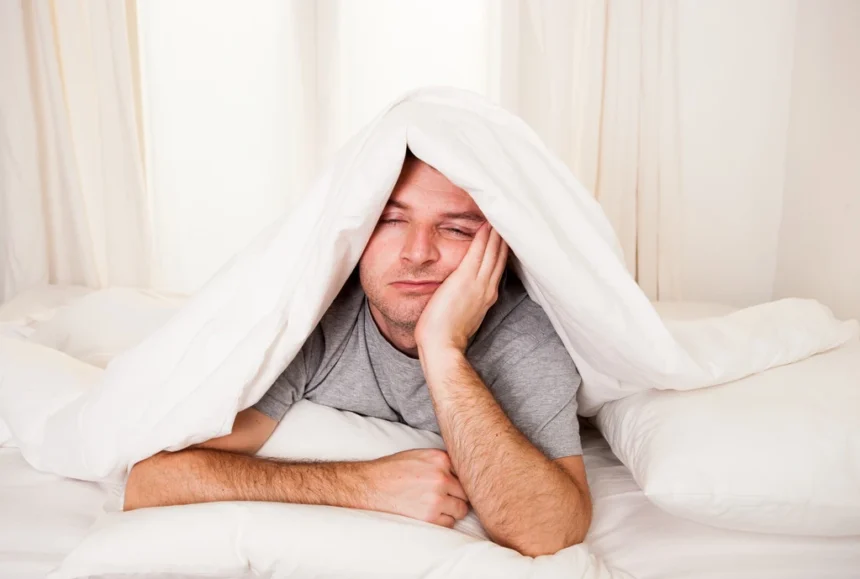
You can’t compress 8 hours of sleep into 4 hours — your brain needs time to cycle through all sleep stages, especially deep sleep and REM. What you can do is make 4 hours far more restorative than a random 4 hours, and manage the next day so you function close to normal. Here’s exactly how.
If you searched this because you’ve got a deadline, a flight, a newborn, or you just messed up your schedule — you’re not looking for a lecture on sleep hygiene. You want to know what to do tonight. So let’s get into it.
Why You Can’t Actually “Compress” Sleep
Sleep happens in roughly 90-minute cycles. Each cycle moves through light sleep, deep sleep, and REM. Deep sleep handles physical recovery; REM handles memory and emotional processing. According to the National Institute of Neurological Disorders and Stroke, a full night typically includes four to six of these cycles. In 4 hours, you only get through two or three.

There’s no supplement, app, or breathing trick that lets your brain skip stages and get the same repair in less time. What actually changes outcomes is cycle alignment — waking up at the end of a cycle instead of in the middle of one.
Step 1: Time Your Sleep to Full 90-Minute Cycles
Waking up mid-cycle, especially out of deep sleep, is what causes that hungover, foggy feeling — not just the lack of hours. The Sleep Foundation recommends timing your wake-up to the end of a cycle wherever possible.
| Bedtime | Wake-Up Time | Cycles Completed |
| 11:00 PM | 2:30 AM | 2 |
| 11:00 PM | 4:00 AM | 3 |
| 12:00 AM | 3:30 AM | 2 |
| 1:00 AM | 4:30 AM | 2 |
Add 15 minutes to your bedtime to account for the time it actually takes to fall asleep.
Step 2: Front-Load the Deep Sleep
Deep sleep is concentrated in the first half of the night. That means your first one to two cycles do more physical recovery per minute than later ones. Practical takeaway: if you only get 4 hours, going to bed earlier and capturing the first stretch of the night recovers you better than sleeping the same 4 hours later into the morning, a pattern confirmed by sleep-stage research from the various reseachers.
Step 3: Protect Sleep Quality, Not Just Quantity
In a short window, every disruption costs more than usual.
- Room temperature: 65–68°F (18–20°C) — cooler rooms speed up deep sleep onset
- No screens 30 minutes before bed: blue light delays melatonin release
- Total darkness: even small amounts of light exposure measurably reduce deep sleep
- No alcohol: it fragments REM sleep in the second half of the night — exactly what you’re already short on, per CDC sleep guidance
Step 4: A Short Nap Can Partially Make Up the Gap
A 20-minute nap (not longer, to avoid deep-sleep inertia) in the early afternoon can restore alertness and reaction time, based on sleep-restriction research published via the National Library of Medicine. It won’t replace lost sleep stages, but it narrows the performance gap.
What to Do the Day After 4 Hours of Sleep
- Get sunlight in the first 30 minutes you’re awake. This resets your circadian rhythm faster than caffeine alone.
- Delay caffeine by 60–90 minutes after waking. Cortisol is already elevated right after waking, so early caffeine has a weaker effect and a worse crash later.
- Avoid driving or high-risk tasks during your circadian dip, typically 1–3 PM, when reaction time on 4 hours of sleep can resemble mild alcohol impairment.
- Plan to repay the debt, not ignore it. Sleep debt is cumulative — your next one to two nights should run longer than usual.
Red Flags: When This Isn’t a One-Off Problem
A single rough night is normal. But if you regularly need to function on 4 hours, that’s worth raising with a doctor, not powering through long-term. Chronic short sleep is linked to elevated risks for high blood pressure, impaired glucose metabolism, and weakened immune response. If fatigue, poor sleep, or related symptoms are becoming a pattern, it’s worth getting checked rather than guessing — you can browse verified general physicians and sleep specialists on Doctiplus or read more on related conditions in our Health Conditions section.
Persistent sleep problems are also often tied to stress, anxiety, or mood — if that sounds familiar, our Mental Health articles cover this in more depth, and you can book an appointment with a verified doctor directly through Doctiplus.
Frequently Asked Questions
Can polyphasic sleep (multiple short naps) replace one 8-hour block?
Most controlled studies show polyphasic schedules reduce performance and mood over time compared to consolidated sleep, even when total hours match. A small minority adapt, but it’s not something to test before something important.
Does the “Uberman” or biphasic sleep schedule actually work?
Biphasic sleep (one main block plus one nap) has more research support than fully fragmented schedules. True polyphasic schedules with many short naps generally aren’t sustainable.
Will melatonin help me sleep deeper in less time?
Melatonin helps you fall asleep faster — it doesn’t increase deep sleep or shorten the cycles needed for recovery.
Is 4 hours of sleep enough long-term?
No. Occasional short nights are recoverable; chronic 4-hour sleep is associated with significant long-term health risks and isn’t something to normalize. If short sleep has become a regular pattern, consult a verified doctor on Doctiplus to rule out underlying causes.
Sources
- National Institute of Neurological Disorders and Stroke — Brain Basics: Understanding Sleep
- Sleep Foundation — How Sleep Cycles Work
- Mayo Clinic — Sleep: What You Need to Know
- CDC — About Sleep
National Library of Medicine / PMC
Medical Disclaimer
This article is for general educational purposes only and does not constitute medical advice. It is not a substitute for professional medical consultation, diagnosis, or treatment. Always consult a licensed physician regarding any sleep difficulties, chronic fatigue, or health concerns. If you regularly cannot get adequate sleep, or sleep deprivation is affecting your daily functioning, speak with a verified doctor on Doctiplus for personalised guidance.

Breanna Roxanne Daniels is a Licensed Mental Health Counselor specializing in psychology and behavioral health in Irvine and Anaheim, CA. With 11+ years of experience in psychotherapy and crisis management, she provides individualized, holistic mental health care